THE KEI TRUCK BUYER'S GUIDE
Choose the right truck for the work.
Clear, practical advice on models, drivetrains, specification and condition—from a UK Kei truck specialist.
START THE GUIDE ↓
1. Start with the job
Don’t begin with a badge or a set of wheels. Begin with where the truck will work, what it will carry and who will drive it. That determines the drivetrain and specification worth paying for.
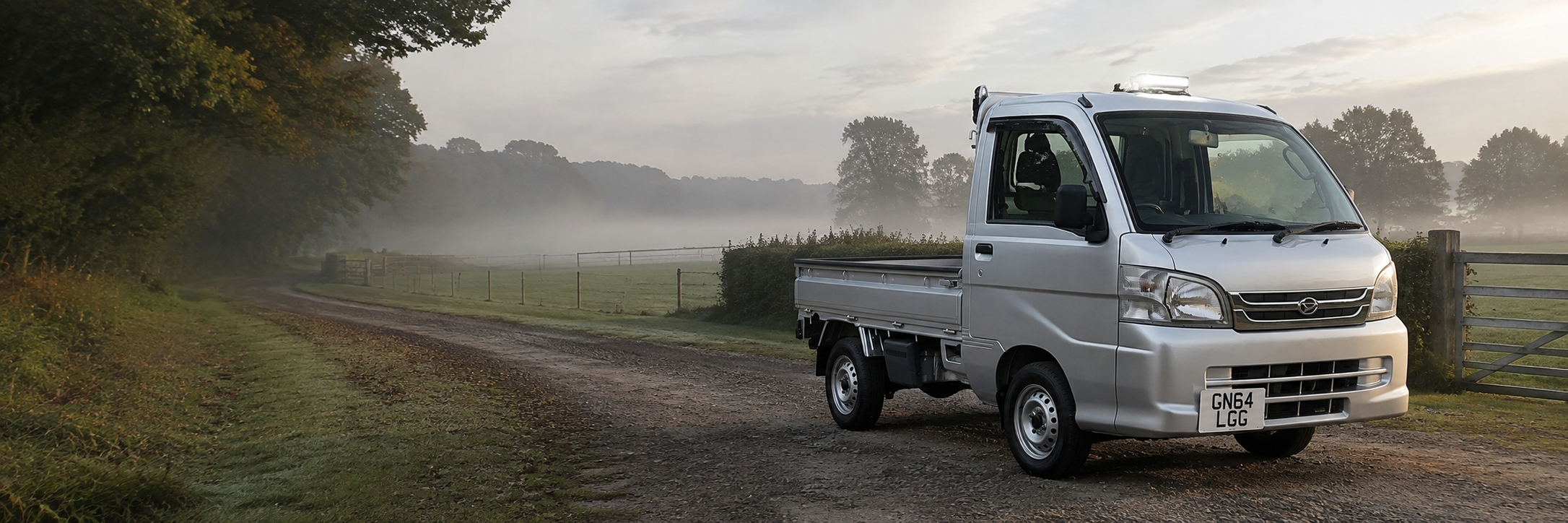
Farms and estates — 4WD is the sensible starting point. A differential lock or high/low range becomes valuable on wet fields, slopes and difficult tracks.
Trades and groundskeeping — prioritise a straight load bed, sound chassis and easy access for tools, materials and green waste.
Road use and deliveries — 2WD can be the better-value choice. Power steering, air conditioning and an automatic gearbox matter more when the truck is used frequently.
Leisure and adventure — buy the best base vehicle first. Wheels, tyres, racks and lighting are easy to add later; corrosion and poor mechanical condition are not.
2. Which Kei truck should you buy?
The honest answer: condition and specification matter more than the badge. A clean, correctly equipped truck is nearly always a better buy than a cheaper example that needs work.
Suzuki Carry
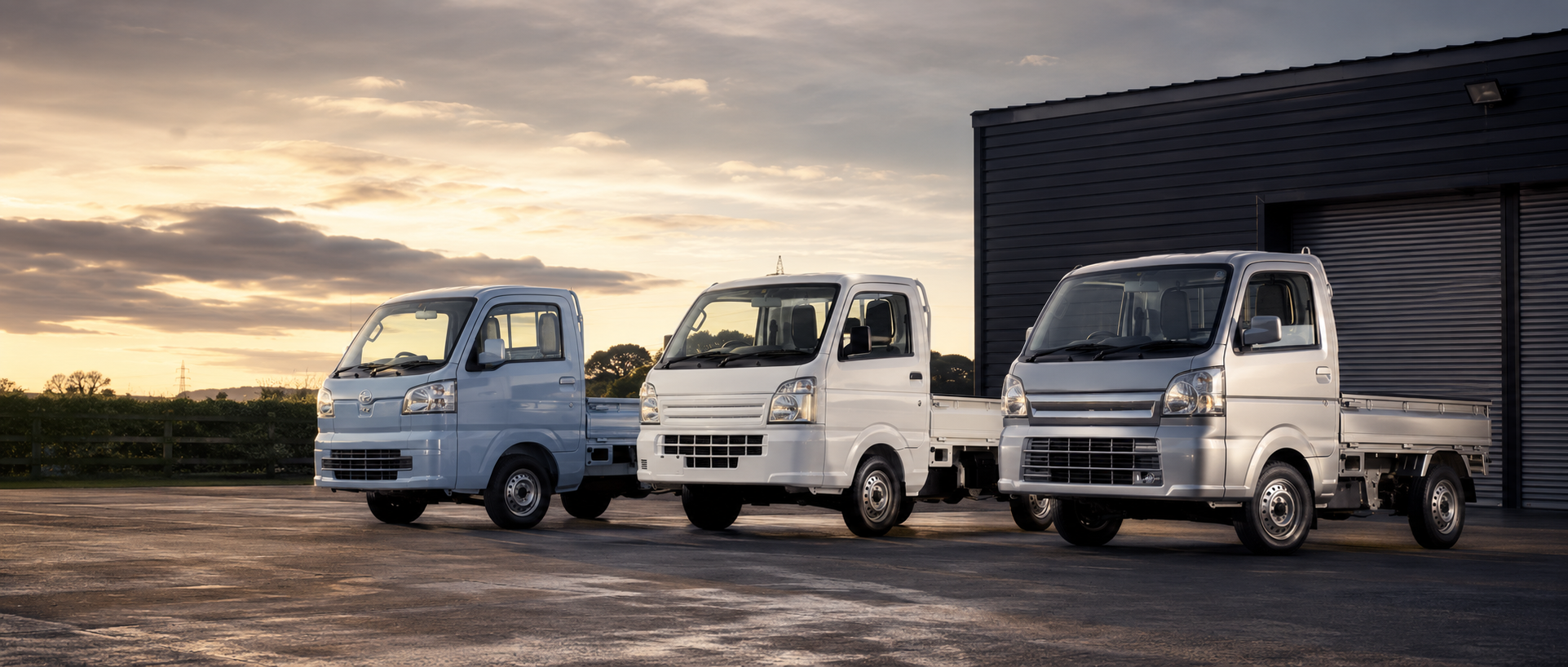
The strongest all-rounder for most buyers. There is a wide choice of ages and specifications, and good examples suit both work and leisure use.
Daihatsu Hijet
A proper working truck with a broad range of useful versions. Jumbo-cab models give extra space behind the seats, while well-specified 4WD trucks make excellent rural vehicles.
Honda Acty
Compact, refined and increasingly sought after. The best ones have real enthusiast appeal, but age and underside condition still need careful attention.
Subaru Sambar
A characterful alternative with a loyal following. Buy from someone who understands the model and can support it after the sale.
Mitsubishi Minicab
Often overlooked, which can make the right example good value. Judge it on condition and equipment rather than familiarity.
3. 2WD or 4WD?
Choose 2WD if the truck will spend nearly all its time on tarmac. It is usually simpler and cheaper, and there is little value in paying for capability you will never use.
Choose 4WD for farms, estates, building sites, woodland or regular use on loose and muddy ground. Confirm how the system engages and test every drivetrain setting before buying.
A 4WD badge alone does not guarantee serious off-road ability. Differential lock, high/low range and suitable tyres can make the bigger practical difference.
4. Manual or automatic?
Manual
The widest choice, good low-speed control and well suited to working use.
Automatic
Easier in traffic and useful when several people will drive the truck. Good automatic examples are desirable, so make sure selection is smooth and the transmission behaves correctly from cold.
5. Specification worth paying for
Air conditioning — worth having for regular road use and summer work.
Power steering — makes repeated low-speed manoeuvring noticeably easier.
Differential lock — helps when one driven wheel loses traction.
High/low range — gives better control for demanding off-road work.
Dump bed — a valuable working tool if you genuinely need it; unnecessary cost if you do not.
Folding bed sides — simple, but one of the features that makes these trucks so useful.
6. What we inspect
This is where a cheap Kei truck can become an expensive one. Photographs of shiny paint tell you very little about the important areas.
Chassis and corrosion
Inspect the chassis rails, crossmembers, cab floor, wheel arches, suspension mounting points and the underside of the load bed. New underseal is not proof of a clean chassis—ask what was underneath it and how it was prepared.
Engine and drivetrain
Start the truck from cold. It should idle cleanly without excessive smoke, leaks or warning lights. Check the clutch, every gear, the steering and the complete 4WD system where fitted.
Mileage and history
Low mileage is attractive, but it does not replace condition. Look for supporting Japanese history or auction information and consider how the truck appears to have been used.
Tyres and servicing
Old Japanese tyres may have plenty of tread but still be unsuitable for continued UK use. Check their age and condition, along with fluids, filters and the maintenance completed since import.
7. UK registration and preparation
A properly supplied truck should be correctly registered, road legal and supported by clear paperwork. Ask exactly what has been done—not simply whether it is “UK ready”.
At Kei Trucks UK, vehicles are selected for condition, specification and individuality, then inspected and prepared for Britain. Servicing, UK compliance work, underbody protection, fresh MOT and warranty support are included where applicable.
Our straight answer
The cheapest advert is not always the best value. Corrosion repairs, old tyres, overdue servicing and incomplete registration work can quickly consume the saving.
Tell us what the truck needs to do and where it will work. We’ll recommend the specification that makes sense—even when that means steering you away from a truck that is wrong for the job.
View available Kei trucks
Or speak to us on 01622 801588.